
The Burnt-Out Parent's Guide to School Refusal: 5 Steps That Actually Work

When mornings feel like a battlefield and every school day brings a fresh wave of tears, stomach aches, and shutdowns, you're not alone. And honestly? You're probably exhausted in ways that are hard to put into words.
If you're reading this, chances are you've already tried the reward charts, the firm boundaries, the gentle encouragement, and maybe even the not-so-gentle "just get in the car" moments you're not proud of. We've all been there. School refusal doesn't come with a manual, and it certainly doesn't care about your work schedule or the pile of responsibilities waiting for you.
Here's what I want you to know first: this isn't about bad parenting, and your child isn't being deliberately difficult. School refusal is almost always driven by genuine emotional distress, anxiety, overwhelm, sensory overload, or something deeper that your young person might not even have the words for yet.
So let's take a breath together. Let's explore five steps that can actually help, not just your child, but you too.
Step 1: Release the Guilt and Recognise What's Really Happening
The hardest part of school refusal isn't always the logistics, it's the emotional weight we carry as parents. The guilt. The shame. The whispered worries about what others might think.
But here's the truth: school refusal is a mental health issue, not a discipline problem.
When we shift our mindset from "my child won't go to school" to "my child can't go to school right now," everything changes. This isn't about being permissive or giving up. It's about understanding that traditional approaches, rewards, consequences, forcing them out the door, often backfire with anxious kids. They can actually increase shame and make things worse.
Instead, try meeting your child where they are. A simple "I know this is really hard, and I'm proud of you for trying" can go a long way. It validates their struggle without adding pressure.
And while you're at it? Give yourself the same grace. You're doing the best you can with an incredibly difficult situation.

Step 2: Get Curious About the Root Cause
School refusal rarely happens "just because." There's almost always something underneath, and it's worth gently exploring what that might be.
Common triggers include:
Sensory overload (noisy classrooms, scratchy uniforms, crowded hallways)
Social anxiety or friendship struggles
Bullying (sometimes subtle, sometimes not)
Learning challenges that make school feel impossible
Perfectionism and fear of failure
A mismatch between the child and the school environment
Start by having open, pressure-free conversations. Not in the heat of the moment, but during calm times, maybe on a walk, in the car, or while doing something together. Ask questions like "What's the hardest part of the day for you?" and really listen without jumping to fix it.
Track patterns too. Does the refusal happen on certain days? After specific events? With particular teachers or subjects? These clues can help you, and any professionals you work with, target support more effectively.
Step 3: Build Your Village (Because You Can't Do This Alone)
Here's where I want to talk directly to you, the parent: you need support too.
School refusal is isolating. Other parents don't always understand. Extended family might offer well-meaning advice that doesn't fit. And the school system can sometimes feel more like an obstacle than a partner.
But you don't have to navigate this alone.
Partner with the school early. Reach out to teachers, school counsellors, or wellbeing staff before absences pile up. Ask about accommodations, modified schedules, a safe person your child can turn to, sensory adjustments, or alternative spaces when things feel overwhelming. Document your conversations in writing so you have a record.
Seek professional help. A therapist or counsellor who understands school refusal can be a game-changer. Look for someone who uses approaches like nature therapy, creative activities, or animal-assisted therapy, especially if traditional talk therapy hasn't clicked for your child.
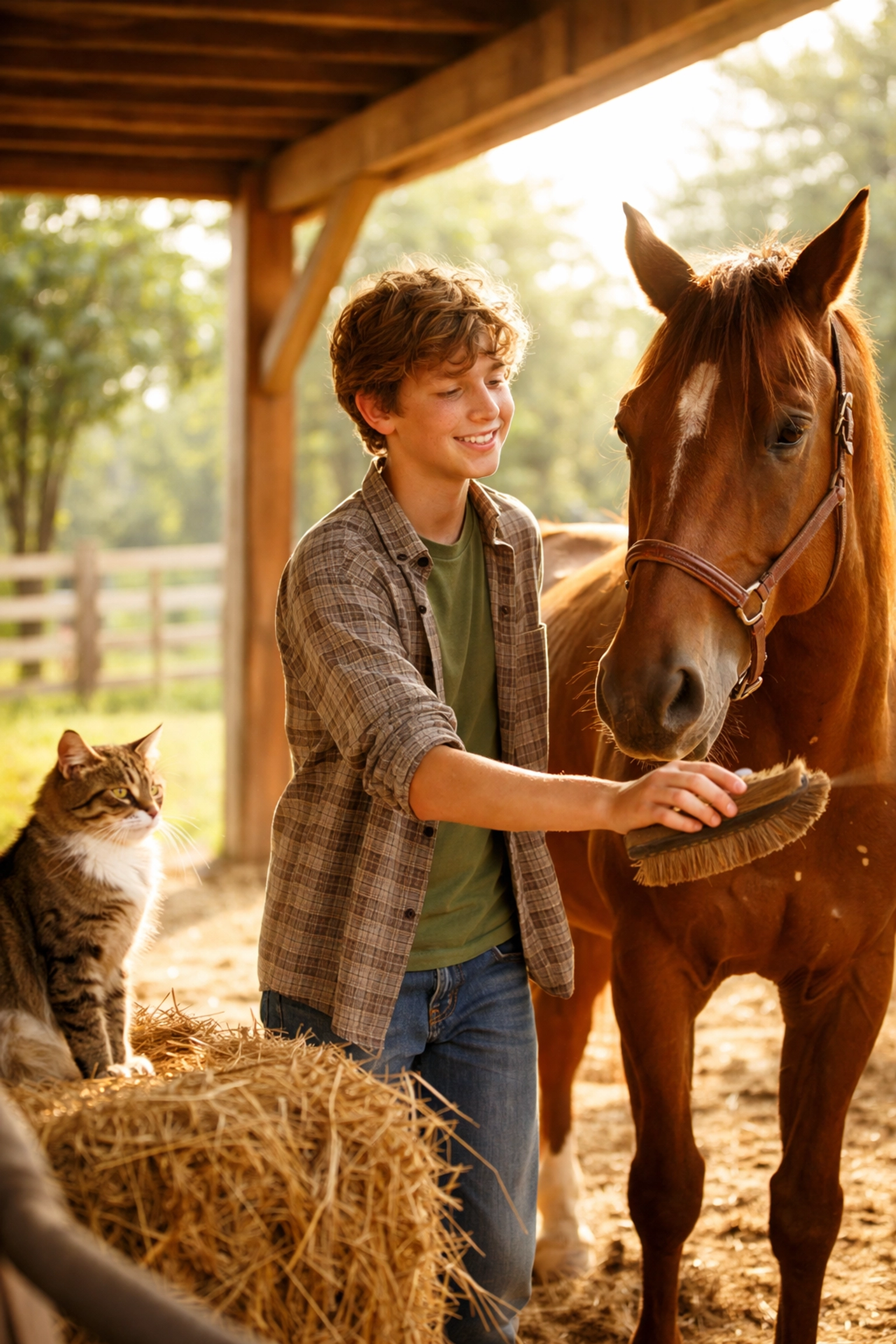
At Karinya Farm, we work with young people who've found traditional settings too overwhelming. Our farm-based counselling creates a completely different environment, one where kids can regulate their nervous systems through connection with horses, cats, and the natural world. There's no desk, no waiting room, no pressure. Just space to breathe and be.
Step 4: Create a Gradual, Low-Pressure Path Forward
One of the biggest mistakes we can make is trying to force a full-time return to school too quickly. It rarely works, and it can actually set things back.
Instead, think about small, sustainable steps.
This might look like:
Starting with just one class or one hour at school
Visiting the school during quiet times to rebuild familiarity
Exploring alternative programs, online learning, or flexible arrangements
Building positive associations through low-stress activities
For some kids, the traditional school environment simply isn't the right fit, at least not right now. And that's okay. What matters is finding ways to keep them learning, growing, and connected.
At Karinya Farm, we've seen incredible breakthroughs through creative counselling activities that don't feel like "therapy." Whether it's grooming a horse, creating art in nature, or simply sitting with one of our farm cats, these experiences help young people build regulation skills and confidence outside of the high-pressure school environment.
We also run a program called NextGen Level Up, a gaming-based therapy program designed specifically for kids who've become isolated. For many school-refusing young people, gaming is already their safe space. NextGen uses that connection to help them build social skills, resilience, and a sense of achievement. It can be a powerful bridge back to engagement and confidence.

Step 5: Look After Yourself (Yes, Really)
I know, I know, when your child is struggling, self-care feels impossible. Maybe even selfish. But here's the thing: you can't pour from an empty cup.
Parental burnout is real. The constant vigilance, the emotional labour, the mental load of managing everyone's needs, it takes a toll. And when you're running on empty, it's harder to show up for your child with the patience and calm they need.
So what does looking after yourself actually look like in the middle of all this?
Letting go of perfectionism. The house can be messy. Dinner can be simple. You don't have to have all the answers.
Finding your own support. Whether it's a friend who gets it, a support group, or your own counsellor, you deserve someone in your corner.
Taking micro-moments. Five minutes outside. A cup of tea in silence. A few deep breaths before the morning routine. These small things add up.
Remembering this isn't forever. Healing takes time, but every step forward counts, for both of you.
At Karinya Farm, we're actually in the middle of creating a space for mums to come together, connect, and share. A place to support each other through these exact struggles. So watch this space, we have some amazing women involved who have not only gone through their own journeys but have helped with mine too. ❤️
You're Not Failing, You're Fighting for Your Child
School refusal is one of the hardest things a family can face. It doesn't fit neatly into a box, and the path forward isn't always clear.
But please hear this: you are not alone, and there is hope.
With the right support, the right environment, and a whole lot of patience and compassion (for your child and yourself), things can shift. It might not look like what you imagined: but growth rarely does.
If you'd like to explore how farm-based counselling, nature therapy, or our NextGen gaming program might help your young person, we'd love to chat. You can learn more about our services here or reach out for a no-pressure conversation.
You've got this. And we're here to walk alongside you. 🌿
Comments